When the at-fault driver has no insurance, the only realistic route to payment is your own uninsured motorist coverage. This case shows how a UM claim is documented, why the police report is decisive, and where the coverage stops.
The facts
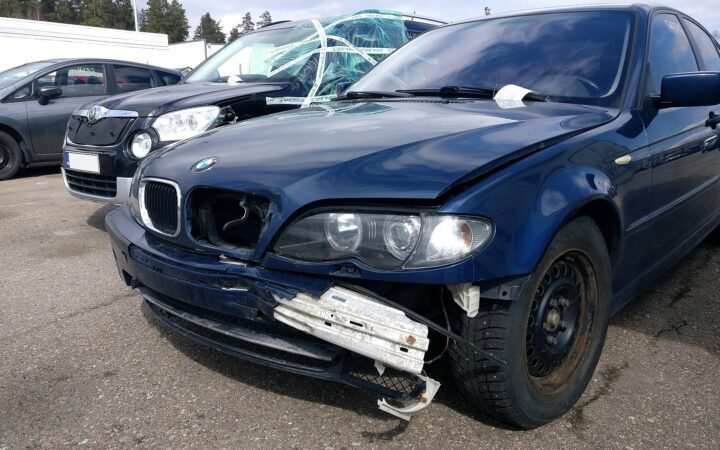
A 34-year-old driver with a non-owner policy including $50,000 UM was struck at an intersection by a driver who ran a red light and fled on foot after the collision. The police report identified the other driver, who had no policy in force.
The insured driver suffered a cervical disc injury requiring an epidural injection and six weeks of physiotherapy. Medical costs: $46,000. Lost wages: $7,800.
Filing against your own policy
The UM claim was filed with the insured’s own carrier, supported by the police report, the other driver’s licence and registration, and a statement that no insurance was in force. The carrier verified the absence of coverage with the state DMV before accepting the claim.
Because UM is a first-party coverage, the insurer investigated and paid rather than defending. Settlement came at $48,500, covering medical costs and most lost wages, within the $50,000 limit.
| Item | Amount | Covered |
|---|---|---|
| Medical costs | $46,000 | Yes, within UM limit |
| Lost wages | $7,800 | Partially |
| UM limit | $50,000 | Paid $48,500 |
| Uncovered balance | $3,800 | Health insurance + savings |
| Subrogation recovery | $2,400 | Returned to carrier |
Where the limit bit
The combined medical and wage loss was $53,800. The UM limit of $50,000 left $3,800 uncovered, absorbed by the driver’s health insurance and savings.
Had the policy carried UM at 100/300 — matching the liability limits — the entire loss would have been covered.
The subrogation outcome
The carrier pursued the uninsured driver and recovered $2,400 over 14 months through a payment plan. Recoveries in UM subrogation are typically under 10% of the payout.
Documentation that decided the claim
Three items carried the file: the police report naming the other driver, the DMV confirmation of no coverage, and continuous medical records linking treatment to the crash date. A gap in treatment of more than three weeks is the most common reason a UM claim gets reduced.
- UM claims are filed with your own insurer, not the at-fault driver’s.
- A police report identifying the other driver is essential.
- UM limits should match liability limits.
- Continuous treatment documentation prevents claim reduction.
Insurers require evidence that another vehicle was involved. Without a police report naming or describing the other vehicle, a hit-and-run claim is treated as a single-vehicle collision — which a non-owner policy does not cover at all.
Key takeaways
- Uninsured motorist coverage is the only recovery route against an uninsured driver.
- Documentation and continuity of treatment drive the payout.
- UM limits that match BI limits avoid out-of-pocket gaps.
- Subrogation recoveries are small and slow.