
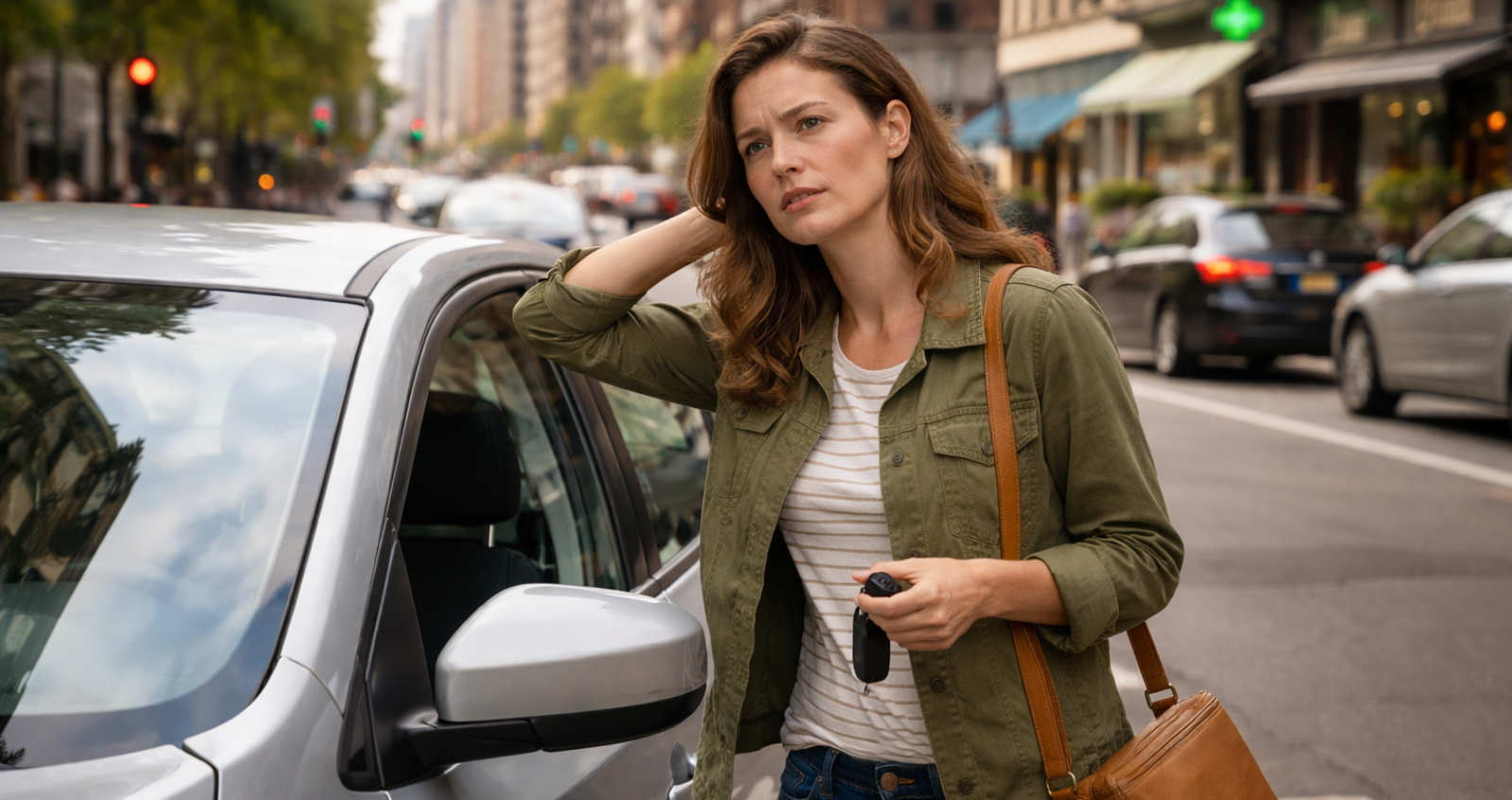
You are renting a studio near the BART station. Your old sedan died last winter. You now take Uber to work and borrow your cousin’s pickup for weekend trips to Lake Elizabeth.
One rainy evening on Mowry Avenue, you tap the rear bumper of a new Tesla. The damage is minor. The other driver’s estimate is $4,700.
Your cousin’s policy denies the claim. You are not a listed driver on his vehicle. His insurer sends you a bill. Then the Tesla owner’s lawyer finds you.
This is where non owner insurance enters the conversation.
What This Policy Actually Does
Non owner car insurance provides liability coverage when you operate a vehicle you do not own and do not have regular access to. It does not cover a car assigned to you daily. It does not cover a car parked in your driveway every night.
The trigger is simple. You drive. You cause injury or property damage. The policy pays up to its limits for the other party’s losses.
In Fremont, the minimum liability requirement under California law is 15/30/5. Fifteen thousand dollars per injured person, thirty thousand per accident, and five thousand for property damage. A non owner policy sold in Alameda County typically starts at 25/50/15 or higher, because agents know that a $5,000 property limit barely covers a broken tail light on a 2025 EV.
Here is where things get tricky. The policy follows you, not the car. If you drive ten different rental cars in a year, the same non owner policy attaches to each incident. If you borrow a neighbor’s minivan for a Costco run, the policy responds as primary coverage when the minivan’s own insurance is exhausted or missing.
The Gap That Most People Miss
You assume that the vehicle owner’s insurance protects you. That assumption holds only if you are a permissive user with no pattern of regular use. California courts have repeatedly ruled that borrowing a car twice a month for three months constitutes regular use. Once that pattern is established, the owner’s carrier can deny coverage for non listed drivers.
Consider the data. In a 2024 analysis of California liability claims,17 percent of denied claims involved a driver who borrowed a vehicle more than six times in a six month period without being added to the policy. The average out of pocket loss for those drivers was $14,200.
You also face exposure when renting. The rental counter offers a collision damage waiver for $25 per day. That product only covers damage to the rental car itself. It does not include liability for injuries you cause to others. Non owner insurance fills that exact hole, at a cost of roughly $250 to $400 per year.
Carrier Differences in Fremont
Progressive writes a standard non owner policy with a 30 day waiting period for new licenses. Their elimination period is zero. That means coverage activates the second you start driving.
GEICO offers a similar product but excludes any vehicle available for your regular use through a household member. If your roommate owns a car and leaves the keys on the kitchen table, GEICO will argue that the car is available to you. A Fremont adjuster denied a claim in 2025 on exactly those facts. The insured had a roommate with a Corolla. The insured drove it eight times over four months. The denial stuck.
Farmers uses a different approach. Their non owner policy includes a contractual duty to report any household member with a vehicle. Failure to disclose that roommate results in a coverage investigation.
Bristol West, which writes many non owner policies in Alameda County, applies a surcharge if you have had a suspension or a DUI in the last ten years. Their rate for a clean driver age 30 is $312 annually. Add a single at fault accident, and the premium rises to $590.
The Tax Detail No One Mentions
Non owner insurance premiums are not tax deductible for most individuals. The IRS treats personal auto coverage as a nondeductible personal expense under Section 262.
A different rule applies if you have a sole proprietorship or a single member LLC and you use borrowed vehicles exclusively for business errands. In that case, you may deduct the portion of the premium allocable to business use. The key is mileage tracking. You need a log showing each trip, its purpose, and the miles driven. Without that log, the deduction evaporates under audit.
For a freelance photographer in Fremouth who rents vans for location shoots, the non owner premium can become a Schedule C expense. For a software engineer commuting to Meta’s Fremont office via a friend’s carshare, no deduction is allowed.
Three Mistakes You Will See Online
First mistake is the belief that your credit card provides liability coverage. Credit cards offer collision damage waiver for rental cars. They almost never include third party liability. Read the fine print of any Visa or Mastercard benefit guide. You will find an explicit exclusion for bodily injury and property damage liability.
Second mistake is relying on an employer’s hired and non owned auto endorsement. That endorsement covers employees driving for work purposes only. A delivery driver for DoorDash would be covered while making a delivery. That same driver picking up groceries for home would not be covered. The policy excludes personal errands by name.
Third mistake is assuming that a non owner policy protects you in a car you own. If you buy a $3,000 Honda Civic next month and do not switch to a standard auto policy, your non owner carrier will deny every claim. The contract states clearly that coverage exists only for vehicles not owned by you or a household member.
Your Next Steps Before the Next Drive
Pull your driving record from the California DMV website. A clean record qualifies you for the best tier of non owner rates. A single point reduces the number of carriers willing to write the policy.
Call three independent agencies in Fremont. Ask each for a quote on a non owner liability policy with 100/300/50 limits. That is $100,000 per person, $300,000 per accident, and $50,000 property damage. The premium difference between 15/30/5 and 100/300/50 is often less than $120 per year, because non owner policies have no physical damage coverage to price.
Request the policy form before you pay. Look for the section titled “Exclusions – Vehicles Furnished for Regular Use.” Some carriers define regular use as more than four times per month. Others define it as access to a vehicle kept at your residence. The stricter definition creates more denial risk.
Ask the agent about the rated drivers in your household. If you live alone, the underwriting is straightforward. If you live with three roommates, each with a car, expect the carrier to ask for their names and license numbers. Some carriers will require you to sign a statement that you do not drive their vehicles. That statement becomes a sworn document. Lying on it constitutes fraud.
The Final Numbers
As of May 2026, a non owner policy in Fremont for a driver age 25 to 35 with no accidents and no DUI runs between $268 and $455 per year from standard carriers. Non standard carriers like The General or SafeAuto offer policies from $189 to $310, but their claims handling ratios in Alameda County are consistently lower. The California Department of Insurance complaint index for non owner claims places Progressive at 0.42 (industry average is 1.0) and The General at 1.87.
You are paying for a contract that sits idle for 364 days and saves you from a $50,000 judgment on day 365.
The cousin with the pickup truck will thank you when you hand him proof of your own coverage. The Tesla driver will file through your policy, not through a lawsuit against your wages. And the rainy evening on Mowry Avenue becomes a paperwork exercise, not a financial collapse.